
Filing Requirements for Tax-Exempt Organization
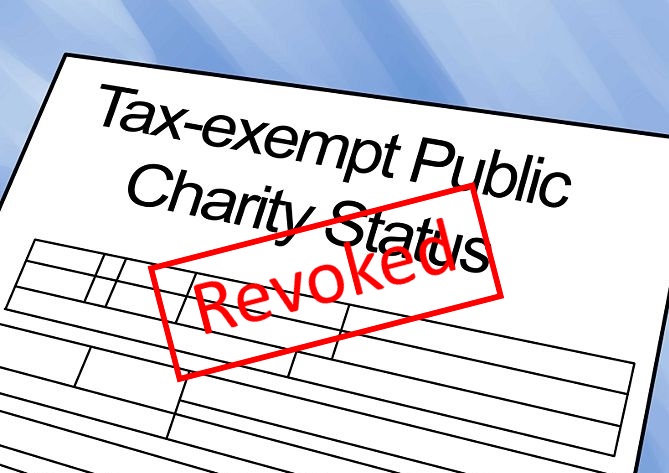 Although tax-exempt organizations do not pay federal income taxes, they are required to file annual informational returns with the IRS. Small tax-exempt organizations (those whose gross receipts are normally $25,000 or less) were formerly exempt from the filing requirements. However, the Pension Protection Act of 2006 imposed a new filing requirement on these smaller organizations to ensure that the IRS and potential donors have current information about them. These new requirements took effect for tax years beginning in 2007.
The following is a brief summary of the IRS annual filing requirements for exempt organizations:
- Tax exempt organizations that have annual gross receipts not normally in excess of $25,000 must file an annual electronic notice (e-Postcard) Form 990-N. The e-postcard must be completed and filed electronically – there is no paper form.
- Tax exempt organizations, other than private foundations, must file Form 990, Return of Organization Exempt from Income Tax. If the organization satisfies certain threshold requirements relating to its gross receipts and total assets, then it can elect to file a Form 990-EZ instead of the regular Form 990.
- Tax exempt organizations that have been classified as private foundations must file Form 990-PF, Return of Private Foundation.
Failure to file Form 990, Form 990-EZ, or an e-postcard for three consecutive years will result in revocation of exempt status as of the filing due date for the third return.
Tax-exempt organizations may also have other filing requirements. For example, if your organization has employees, it is probably required to report its federal and state employee withholding, and federal and state unemployment returns. Organizations that sell goods or certain services may be required to file state sales tax returns.
Many people wrongly believe that nonprofit organizations that have tax exempt status are not required to file returns with the IRS or the state revenue departments. In fact, not only are most tax-exempt organizations required to file various reports, often times the filings required from tax-exempt organizations are more complex than those filed by for-profit businesses.
If you are a director or officer in a non-profit, you should meet with a professional that has experience assisting tax exempt organizations to make sure you are staying in compliance by filing the required reports and returns.
You can get more information about tax exempt organization at the IRS’s Exempt Organization website.
What Happens If I Die Without a Will?
 A person who dies without a will is said to have died “intestate” and his or her probate property goes to his or her heirs under the laws of intestacy for the state in which he or she was domiciled.
In Indiana, if you die without a will and, at the time of your death, you have a surviving spouse, then your probate estate is distributed as follows:
- If you have at least one child or other direct descendant who is then living, then one-half (½) of your estate goes to your surviving spouse and the other half goes to you surviving children or other descendants.
- If you do not have any children or other direct descendant who are then living, but one or both of your parents are then living, then three-fourths (3/4) of your estate goes to your surviving spouse and one-fourth (1/4) of your estate goes to your parents.
- If you do not have a parent or descendant who is then living, then your entire estate goes to your surviving spouse.
- There is a special case if your surviving spouse is a second (or other subsequent) spouse and the two of you did not have any children, but you do have a child by a previous spouse. In that case, your surviving spouse receives one-half of your personal property, but takes only twenty-five percent (25%) of the net fair market value of your real property. Your children (and/or descendants of any deceased children) receives the other half of your personal property and seventy-five percent (75%) of the net fair market value of your real property.
If, at the time of your death, you do not have a surviving spouse, then your probate estate is distributed as follows:
- Your estate if first distributed to your children and to the then living descendants of any deceased child.
- If you do not have any children or other descendants who are then living, then your estate is distributed to your parents, your siblings, and the descendants of any siblings who predeceased you. In this case, your parents and siblings each take an equal share, provided however that each of your parents receive at least one-fourth (1/4) of your estate.
- If your parents are not living and you do not have any siblings or nieces or nephews then living, then your estate goes to your grandparents.
- If your grandparents are not then living, then your estate goes to your aunts and uncles, and the descendants of any deceased aunts and uncles (your cousins).
- If you do not have any aunts, uncles, or cousins who are then living, then your estate goes to the state of Indiana.
Using Contracts Effectively
 When Benjamin Franklin said, “An ounce of prevention is worth a pound of cure,” he may very well have been referring to the use of contracts in business transactions.
Few people would dispute that the best way to solve a legal problem is to prevent it from occurring in the first place; and preventing problems is one of the primary advantages of using contracts in business transactions. Not only do contracts help determine the appropriate course of action when a dispute does arise, but in many cases they prevent disagreements from occurring in the first place by clarifying what the expectations of the parties are at the outset, and by clearly establishing each party’s rights, duties and obligations.
The following are a few tips to help you effectively use contracts in your business dealings:
Use Them
The first rule of contracts is that they are only helpful if you use them. While there are some situations when a formal written contract is not needed, there are many more in which one should be used. If you find yourself wondering whether you should be using a contract for a particular transaction, then the answer is probably yes.
Be Aware of What You Are Signing
It is important to review the contract carefully and to make sure you understand all of its terms before you sign it. If the first time you actually read the contract is after a dispute has already arisen, you may be in for an unpleasant surprise.
Beware of the “Standard Form Contract”
With so much information now available on the internet the use of form contracts has become more and more prevalent. Two problems typically arise with form contracts:
- Form contracts that are poorly drafted; and
- Form contracts that are used in transactions for which they were not designed.
Form contracts can be a useful tool, but they must be carefully prepared and their limits must be properly understood and respected or they can cause serious problems.
Sign the Contract Properly
Any contracts you sign should use the proper legal names of the companies and persons signing them and they must be signed properly. If you are signing a contract on behalf of your company it must be made clear that you are signing in your representative capacity only. This can be done by printing the name of the company above the signature line, and printing your title or representative capacity after your signature.Failing to sign a contract properly can expose you to personal liability.
Calendar Important Contract Dates
Establish a calendar or tickler system to remind you of all important contract dates. Contracts often contain numerous deadlines and time constraints, many of which can be surprisingly subtle. It is important not to let a contract deadline inadvertently slip by unnoticed.
Establish a Contract Filing System
You should retain at least one copy of every contract you sign and it should be placed in a filing system (electronic or paper) that allows you to quickly locate it if a question or dispute ever arises. There are few things as frustrating as trying to look up a provision in a contract that you cannot find.
Case-in-Point
The case of TW Contracting Services, Inc. v. First Farmers Bank & Trust represents a classic example of what can go wrong when the contract is not reviewed carefully and the person signing it is not fully aware of its terms or their implications.
Jack and Carolyn Taylor, and Harland and Delores Wendorf obtained two loans (Loan A and Loan B) for their company, TW Contracting, to build a spec home. The Taylors and Wendorfs each signed personal guaranties for the loan.
Both of these original loans were paid off, but TW Contracting later obtained five more loans (Loans C, D, E, F, and G). When TW Contracting could not repay loans E, F, and G, the bank filed suit against the Taylors and the Wendorfs under their guaranties.
The Taylors and Wendorfs argued that they were not personally liable for the loans because their guaranties only covered Loans A and B, not Loans E, F, and G.
In support of their argument, Mr. Taylor provided an affidavit stating that he did not intend to personally guaranty Loans E, F, and G, that he had informed the bank he was not guaranteeing the subsequent loans, and that he believed that personally guaranteeing any additional loans would require a new set of guaranties.
Despite Mr. Taylor’s assertions, the court held the Taylors and the Wendorfs personally liable for the TW Contracting loans.
The court noted that the guaranties signed by the Taylors and the Wendorfs had clauses specifically stating that they were guaranteeing the payment and performance of “each and every debt, liability and obligation of every type and description which Borrower may now or any time hereafter owe to Lender.”
The court also pointed out that the guaranties contained clauses stating that:
- the guaranties were “absolute, unconditional and continuing ” and they were to continue until the guarantors revoked them by giving the bank written notice;
- the guarantors were to be “liable for all indebtedness, without any limitation as to amount”; and
- the bank could “enter into additional transactions with (TW Contracting) without first obtaining the consent or approval of the guarantors.
While Mr. Taylor may have truly intended to guaranty only Loans A and B, the court looked to the actual language of the guaranty to determine what his true liability was. The court found that the language in the contract was not vague, and that the Taylors and Wendorfs had entered into “unmistakable, very expansive guaranties.” The plain language of the guaranties made the Taylors and Wendorfs personally responsible for unlimited, ongoing liabilities of TW Contracting.
One thing to notice in this case was that the guaranties in this case contained a subtle type of deadline. The guaranties were to be ongoing until the Taylors or Wendorfs affirmatively terminated them by providing written notice to the bank. Any time a contract contains an unlimited, ongoing obligation or liability it should raise a red flag, and some type of system should be put in place to ensure that the contract or situation is monitored and periodically reviewed.
Conclusion
Contracts are a vital part of many transactions and, when properly used, can prevent disputes and costly legal problems. Unfortunately, after spending considerable effort to come to agreeable terms, the preparation of the actual contract is often treated as a ‘mere detail’. The wise manager or business owner understands that the time spent making sure a contract is carefully prepared and properly executed can prevent significant (and costly) problems down the road.
 D5 Creation